Margaret Busby: What it takes to be the first Black Woman Publisher in the UK – Part 3

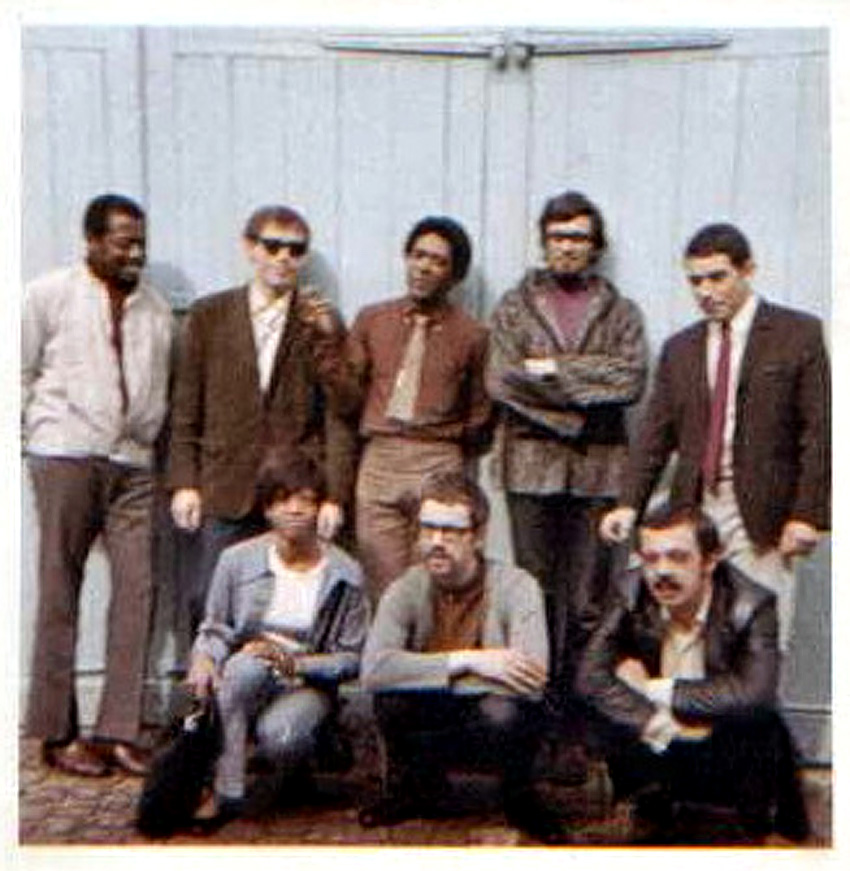
David Baldwin,Paul Zec,Freddie Redd,SteveCox,PhilSolomon,MargaretBusby,LionelGrigson,SpikeWells-001
David Baldwin (James Baldwin’s brother), Paul Zec, Freddie Redd, Steve Cox, Phil Solomon, Margaret Busby, Lionel Grigson, & Spike Wells.

Satch Hoyt: You know this interview is for my blog, Afro-Sonic Mapping: Tracing Aural Histories via Sonic Transmigrations, so I’m actually looking at black narratives from a sonic perspective. Obviously you were in the UK at a very important period – a transitory period. And there were a lot of amazing musicians coming through. Would you like to talk a little bit about some of the musicians that you met and what was sonically going on in that particular period of the ‘60s?

Margaret Busby: Well, I’ve talked about my late ex-husband, Lionel Grigson – he was a jazz musician. He played trumpet and piano. After he graduated, he was involved with the university jazz group. In London he used to play at this place called the Troubadour on Old Brompton Road; a lot of musicians came through his group and played there. In fact, just down the road from that place was a pub, which was actually a gay pub, but it had a West Indian session on Sunday at lunchtime, I believe. So, a lot of West Indians came through.

SH: Did you know Joe Harriott?

MB: Yeah, I knew Joe Harriott. I was also thinking the other day about this Trinidadian, David “Happy” Williams, who actually used to play with Lionel. He went to the States and ended up playing with Cedar Walton for decades. Freddie Redd was also in London at one time; there was also Alexis Korner – so, blues and jazz musicians. Fela’s fusion was also going on. Actually, I published a book about Fela in 1983 – called Fela, Fela: This Bitch of a Life.

Miriam Makeba etc
Miriam Makeba

SH: Who wrote that book?

MB: A Cuban friend of mine called Carlos Moore. He was in Paris for a long time – that’s where I first knew him.

SH: What period was that?

MB: The ‘60s.

SH: That’s when James Baldwin and Richard Wright were there, as well.

MB: Yes. There were a lot of expatriate blacks in Paris in that era; they were all connected. There was Carlos, there was a Jamaican called Lindsay Barrett, who’s a writer and wrote about music – he’s still a friend of mine.

Back in the ‘60s, I also saw Black Orpheus and fell in love with Brazilian music. In fact, I started to learn Brazilian Portuguese just because I loved the music and wanted to understand the lyrics. I remember one song seemed like the beginning of a novel; it started: “I’ve got the marks of her teeth on my arm.”

SH: All of those instruments in Brazilian music – the berimbau or the cuica – are actually Angolan instruments, which is quite amazing. I was in Luanda last year working on my project. I’m actually looking at the way the music left the continent; I’m arguing, in fact, that the slaves acted as portals and carried this mnemonic network of sounds over to the Caribbean basin and the Americas. Then, amalgamations occurred in New Orleans with French classical music, creating jazz in Congo Square and so on and so forth.

MB: And then going back to Africa.

With Randy Weston over the decades. Left: with Randy Weston, ca. 1983; Right: Fatou Weston, Pam Weston, Chris Calhoun, Randy and Margaret Busby.

SH: Exactly. For instance, with Franco and the rumba in Congo. Or with Fela studying here, then going to America, meeting the Black Power Movement, and then his music becoming politicized, as well as all of the jazz influences that occurred.

MB: Well, even with people like Randy Weston. In fact, one of the early books I did – around 1970 – was by Valerie (Val) Wilmer and it was called Jazz People. It featured interviews with about a dozen jazz musicians, including Randy. Actually, one interview she had done was not quite an interview – it was with Miles Davis and went like this: “When I said later, baby, I meant later.” That’s what she got from Miles.

Then we did another book by her later – which was just reissued last year by Profile Books – called As serious as your life. The title is a quote from McCoy Tyner, who had said, “Music is not a plaything; it’s as serious as your life”.

NinaSimone & MB, March '84
Nina Simone & Margaret Busby, March ’84.

SH: Do you have a Miles Davis story?

MB: I heard him in London. I think the last time I heard him was not long before he died. I used to go to Ronnie Scott’s a lot and I heard a lot of good people there. It’s funny how in those days you took things for granted; like, you’d just hang out with Freddie Hubbard after a gig, or whatever. I was sharing a flat with my sister in Belgravia and Freddie and his then-wife would come by. I actually used to write song lyrics, as well.

SH: Who did you write song lyrics for?

MB: For my husband and his band. The singer Norma Winstone also sang some of my lyrics – lyrics to something called “Some Time Ago”. Norma recorded it, as well as some Brazilian singer. In fact, by chance I came across a CD and there was this singer, singing my lyrics – I’m not sure how she found them. So, not a lot was recorded, but I used to write a lot of lyrics.

SH: What about the Brotherhood of Breath – did you know those guys: Chris McGregor, Louis Moholo and Mongezi Feza?

MB: Yes, of course. Abdullah Ibrahim is also a friend of mine. A lot of them played in a jazz club – the Jazz Cafe. Happy Williams played with Lionel; Philly Joe Jones, the drummer, was in London for ages. He used to hang out with us. There were quite a few who came through London at that time.
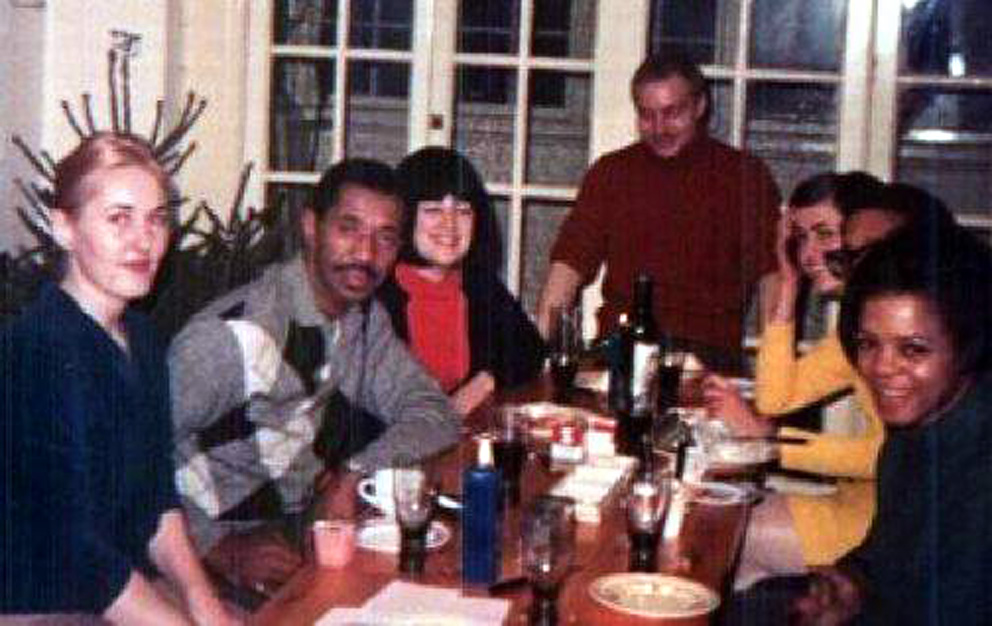
PhillyJoeJones etc at JohnHart's, late '60s
With Philly Joe Jones at John Hart’s, late ’60s.


Margaret Busby: What it takes to be the first Black Woman Publisher in the UK – Part 2

IMG_20190707_193621_840
Margaret Busby in London, June 2019. 

Satch Hoyt: You – Allison & Busby – along with New Beacon and Bogle-L’Ouverture were the pioneers of black publishing; you were at the vanguard. What, in your assessment, is the state of black publishers and writers in the UK right now?

Margaret Busby: Well, at the moment, I suppose there are more black writers published than previously.

SH: But what about the material that’s being published? Because what you were printing in that early period were giants like C.L.R. James and Sam Greenlee.

MB: The thing is, they weren’t giants at that time. Nobody wanted C.L.R. James or Sam Greenlee.

SH: Regardless of whether anybody wanted them, C.L.R. James’s The Black Jacobins, for instance, was the book on the Haitian Revolution.

MB: In retrospect it is. But then, why was he out of print? If I were still publishing, there are many things that are out of print that I could reprint. What happens a lot is that it’s about fashion. I’m also always stressing the need for more black people involved in publishing – whether in autonomous companies or within the mainstream, because there are still very few people in the mainstream companies. You can say there are more books published, but then it’s about who’s choosing those books and why they’re choosing them. They’re picking those books because that’s their view of what African literature should be. And yet, the buzzword these days is ‘diversity’, or ‘inclusivity’ – everybody’s talking about it. But why talk about it? Just do the right thing. Also, what happens when you have these initiatives? They talk about publishing more books by working class writers, or BAME – I hate that word – ‘Black Asian Minority Ethnic’ writers. It’s all virtue signifying. The industry itself hasn’t changed.

And yes, there’s a need for more of us to actually want to be in publishing. Often, I’m at events or on panels and I ask the audience how many people want to be a writer, and everybody’s hands go up. And then you ask who wants to be a publisher and nobody’s hand goes up. But you can do both; it’s not as if you have to choose. You just have to be involved; otherwise they get to decide that you can come in the door. We have to be there at every level, whether it’s on the newspapers, etc. Otherwise, who chooses to review your show or my book? Who are the gatekeepers? We need to be part of it, so that there can be other perspectives. That way, everybody ends up benefitting. You want a richer literature, a richer artistic community. You don’t want everything to be narrowed down to just a small voice or coterie of people that are all thinking the same way. It would be very strange if you walked down the street and everybody looked exactly the same, spoke the same, or wore the same clothes. How boring would that be? But sometimes you feel that’s how it is. I can still go to a publishing party where I’m the only black person. And it’s not as if they even notice, because that’s the way it is for them – that’s the norm.

SH: Well, hopefully we will see a big show of hands next time you start asking that question about who wants to be a publisher.

MB: I hope so. That’s why, in the ‘80s, I was part of an initiative called GAP (Greater Access to Publishing). We were campaigning for more diversity within the industry. We had seminars for black women that wanted to get into publishing – showing them how to write their CVs. We had seminars with career officers in order to get them to suggest publishing as a possible career to people. It’s necessary for people to see that there are people like them within other industries; otherwise, why would they think they belong there? I know people who have become publishers because they knew I was there. Otherwise you’d think: well, that’s an industry that’s totally white; I’m not allowed in there.

IMG_20190707_194124_819

SH: Who do you think are the bright literary black stars on the horizon now?

MB: There are so many – there are 200 in my book: New Daughters of Africa. The point of doing this book was to show in this list of 200 that you may recognize some names, like Zadie Smith, but you may not have heard of all the others, even though they’re worth reading. And why haven’t you heard of them? Because they just let one or two of us through and they get the promotion and the publicity and everybody else is just lucky if they get published. It was the same with the first book, Daughters of Africa, because in those days – in the early ’90s – you would have thought there were just three black women writers: Alice Walker, Maya Angelou and Toni Morrison. I wanted to say that they’re great, they’re in my book, but actually, here’s another 200, and they date back to ancient Egypt. The subtitle of that was: An International Anthology of Words and Writings by Women of African Decent from the Ancient Egyptian to the Present. In this new book, as well, since it’s ordered by decade of birth, I wanted to make sure there were a few representatives from the 19th century, or even earlier, to show that we didn’t all just happen in the 21st century. There actually were literate, creative black women writing way back. So there is a handful from that earlier era and then the most recent of them were born in the 1990s. It’s just to show there is a breadth, there are links, and there are batons being passed and people who influenced others. It also shows that people are different, but there’s also a collective shape.

SH: You’ve done that in this book.

MB: Well, I’ve done this, but I could do another one tomorrow with a completely different set of names. I asked someone who was interviewing me recently if they could do a book of just 200 white women, or European women – everybody from Jane Austin to J.K. Rowling – and if they would be satisfied with just 200. Of course they wouldn’t. So why should we say that there are only 200 women of African decent? There are many more. I started with a spreadsheet of hundreds of names.

SH: How did you curate down to 200?

MB: There’s nothing scientific about it. Again, I’m not saying that the people in this book are the only ones that deserve to be showcased, or that these are somehow better than those that aren’t in there. If you did an anthology it would be a completely different selection. It’s the same with prizes. When someone wins a prize, it doesn’t mean that they’re necessarily scientifically better than everybody else; it’s just who the judges have chosen on that particular day. So it might have been people that I knew, people whose email addresses I had, people who were suggested by other people; some people replied, some people didn’t reply, others missed the deadline. There are many reasons why the people who are in there are in there. But it’s not deliberately excluding anybody. I mean, left to me, this book would be 10 times the size.

SH: So, there’s going to be another 5 volumes?

MB: Well, If I could do it, and if it was something seen to be profitable by the publishers, of course I’d do it. I’m really pleased with it and everybody in there deserved to be in it, but I can’t stop thinking about all the people that are not in it.